- Role
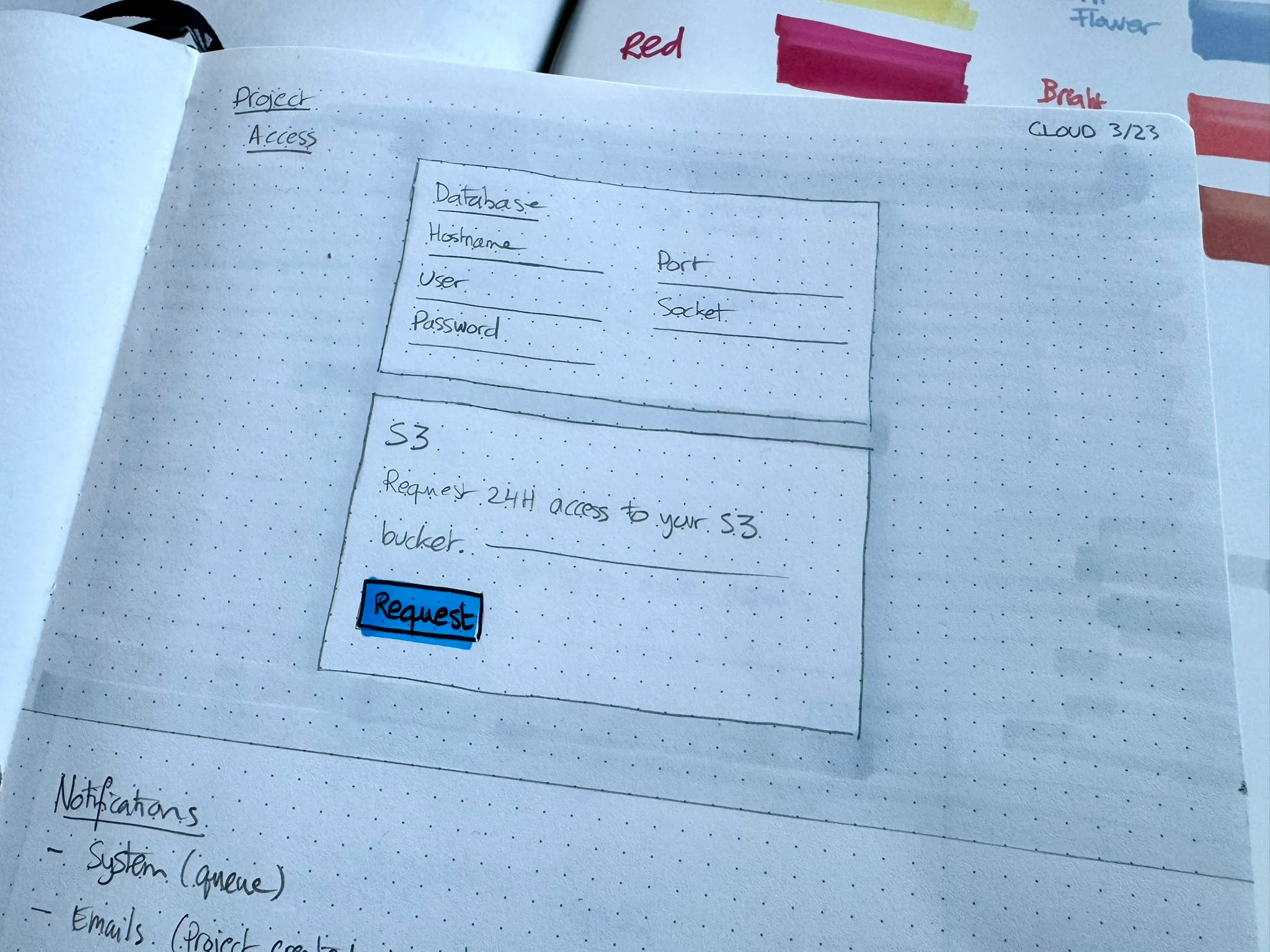
- Writing specs with stakeholders, then design, from notebook sketches to detailed Figma prototypes, then the Vue.js frontend.
- Team
- Me (design and Vue.js frontend), Brandon (CEO), and backend engineers on the infrastructure and APIs.
- Timeframe
- Take #1 announced in September 2019 and dropped in 2020. Take #2: the three years or so it took to build, about six months of private beta, then a public launch in summer 2024.
- Shipped
- Hosting for Craft, managed and run from Craft Console.
Hosting tailored for Craft, from the team behind it, so customers can publish their projects without worrying about DevOps. Announced in 2019 as a headless-only platform, customer feedback sent us back to the drawing board, and Craft Cloud became a scalable hosting solution for every kind of Craft site. I designed the experience from sketches to high-fidelity prototypes and implemented the front-end with Vue.js. Five years in the making, Craft Cloud launched in the summer of 2024.
The challenge
Customers kept asking, in support and at our conferences, for a hosting solution from Pixel & Tonic itself, so they wouldn’t have to deal with DevOps. The solution would serve the customers we already had and give the company another source of income.
My role
Cloud is the most representative of what we started from scratch at Pixel & Tonic. I spent time with Brandon, our CEO, the engineers, marketing and sales to define the problem and write the specs. Brandon was still around to help with the decisions, but he was stepping back from design, so I was mostly the only one working on it. I designed it and built the frontend in Vue.js, with Storybook for its components, against the APIs the backend engineers were providing.
The tension
Our first take followed the headless trend as a headless-only platform. We were so sure of the direction that we announced it at the 2019 Craft conference, before anyone outside had used it, and jumped a bit too early into planning and coding. A year later, the people testing it weren’t happy with the small part we had made. We had built for where we expected the market to go, not for what our customers would actually do with it.
What wasn’t obvious
Many Craft sites rely on custom plugins, and Take #1 couldn’t run them. Early testers found it too limiting. They wanted the Craft sites they were already building to be easier to run, plugins included.
Other ideas also came out when we included customers in our brainstorming sessions for Take #2, like working as a team on projects, or organization licenses and billing.
Take #1 to Take #2
Customer feedback made it clear Take #1 didn’t properly address the customers’ needs, so we needed to pivot. We scrapped work and went back to the drawing board. For Take #2, we brought a group of 10 to 15 people into our brainstorming sessions: developers, agencies and customers. They didn’t want headless Craft in the cloud, they wanted a flexible hosting solution tailored for Craft.
Take #1: the headless-only concept, before customer feedback sent us back to the drawing board.
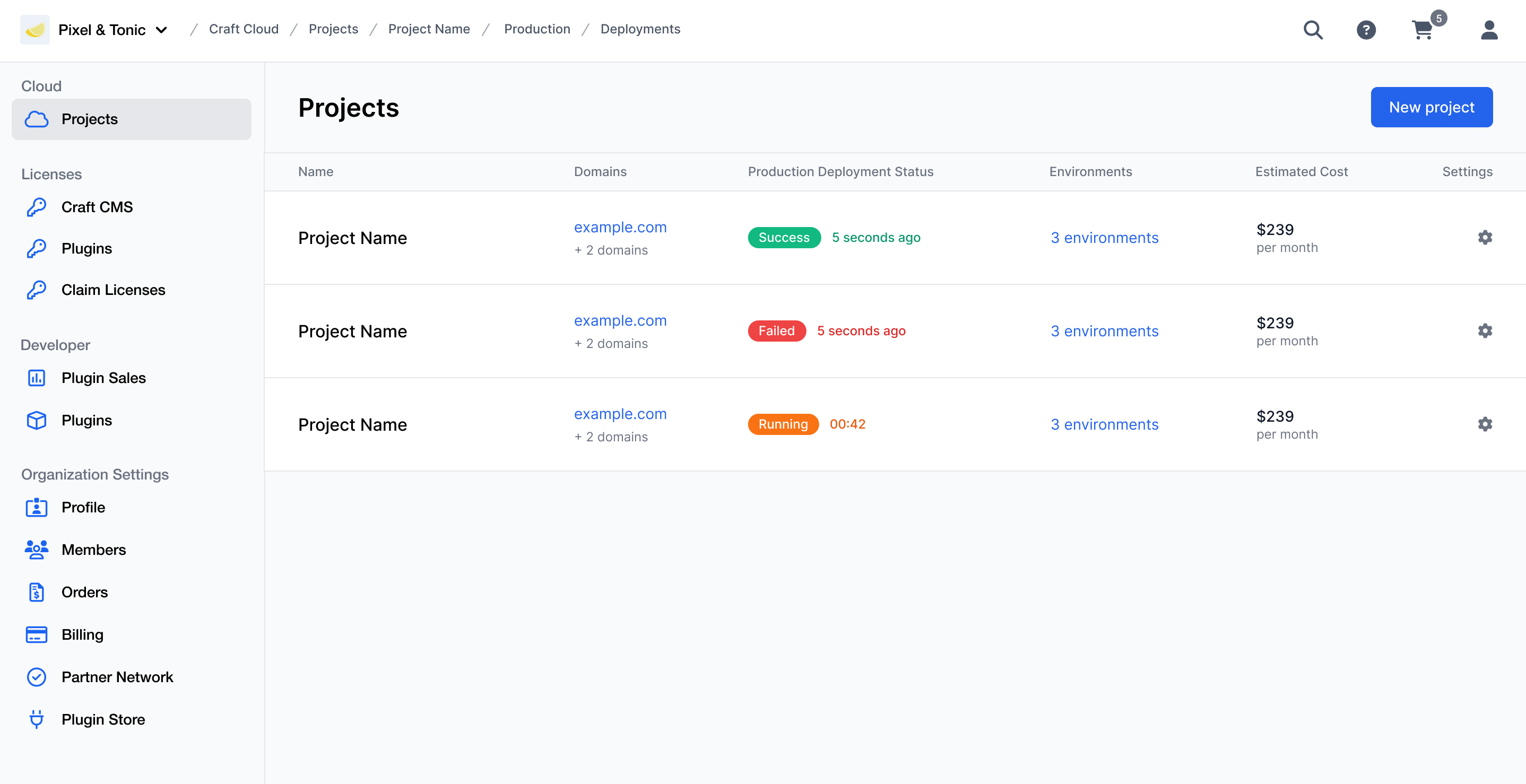
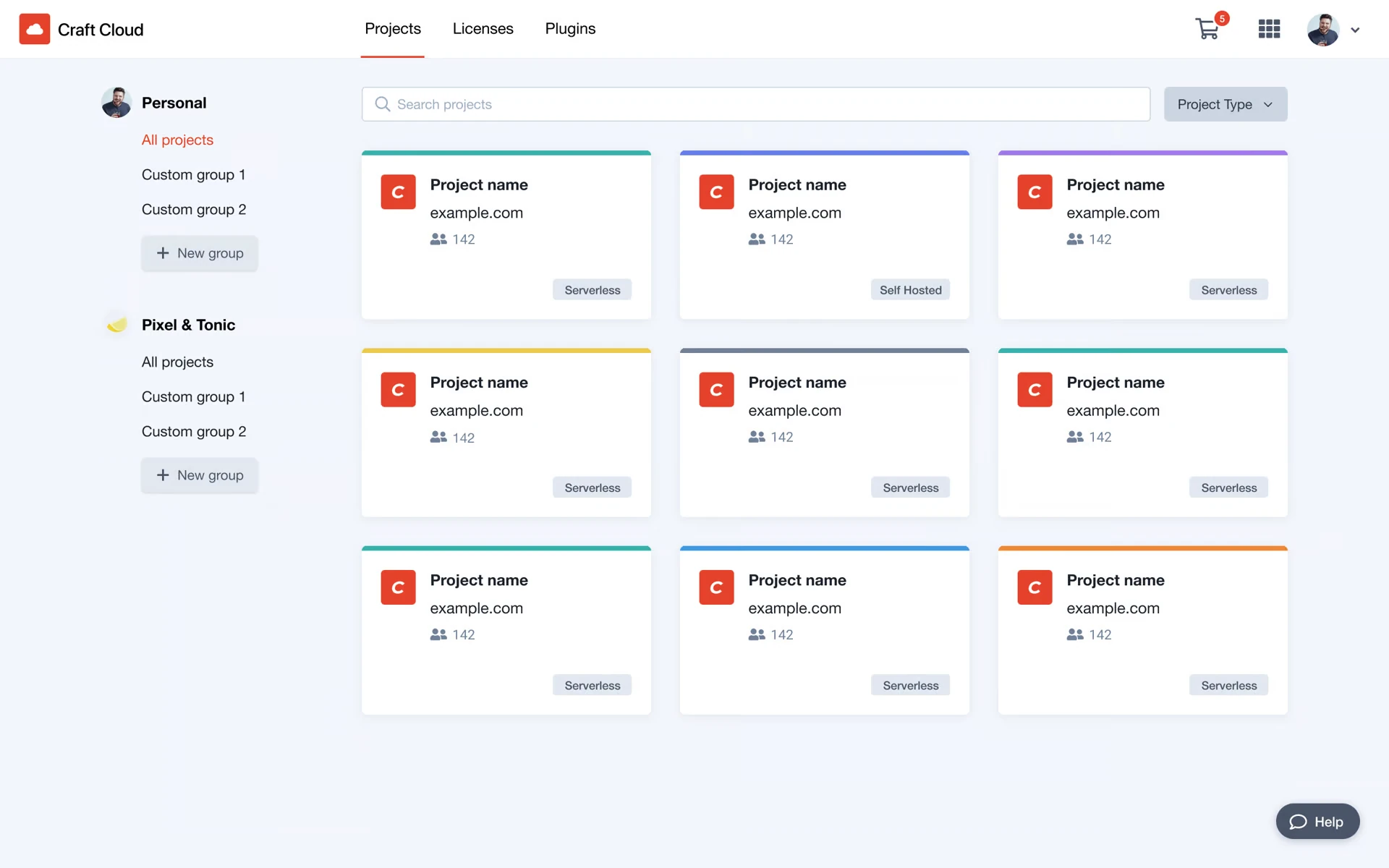
Take #2: hosting tailored for Craft, plugins included, with each project’s deployment status and environments at a glance.
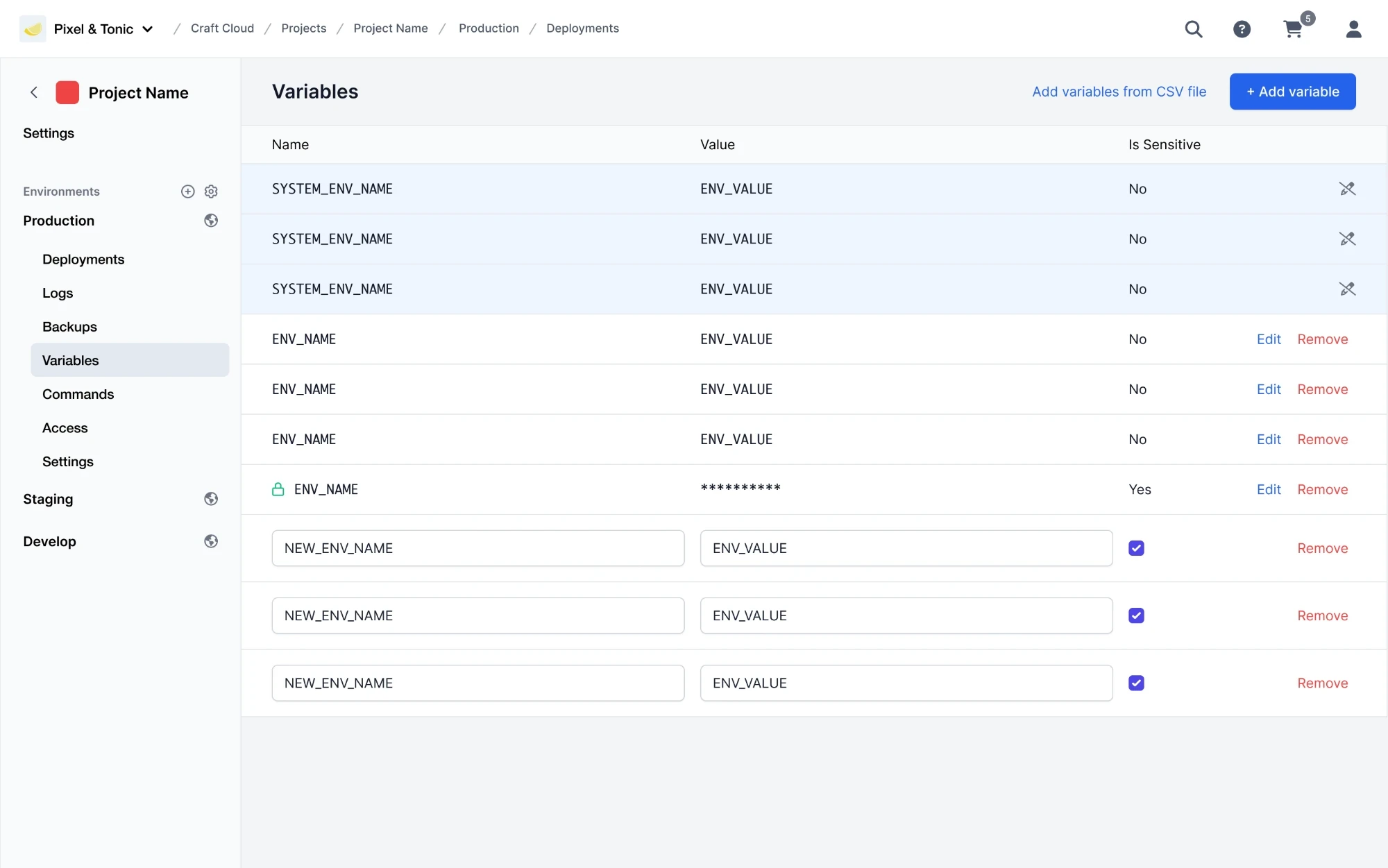
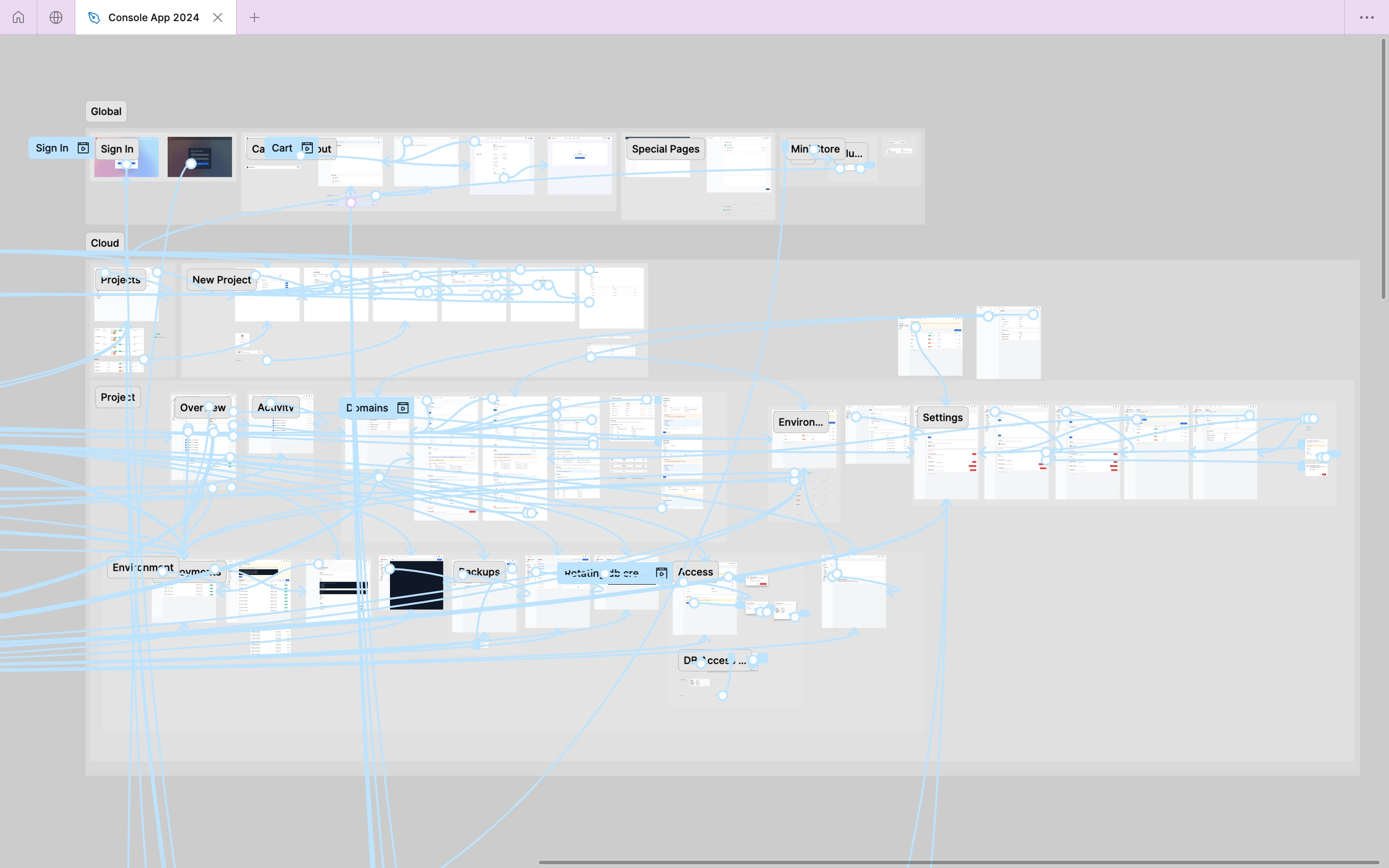
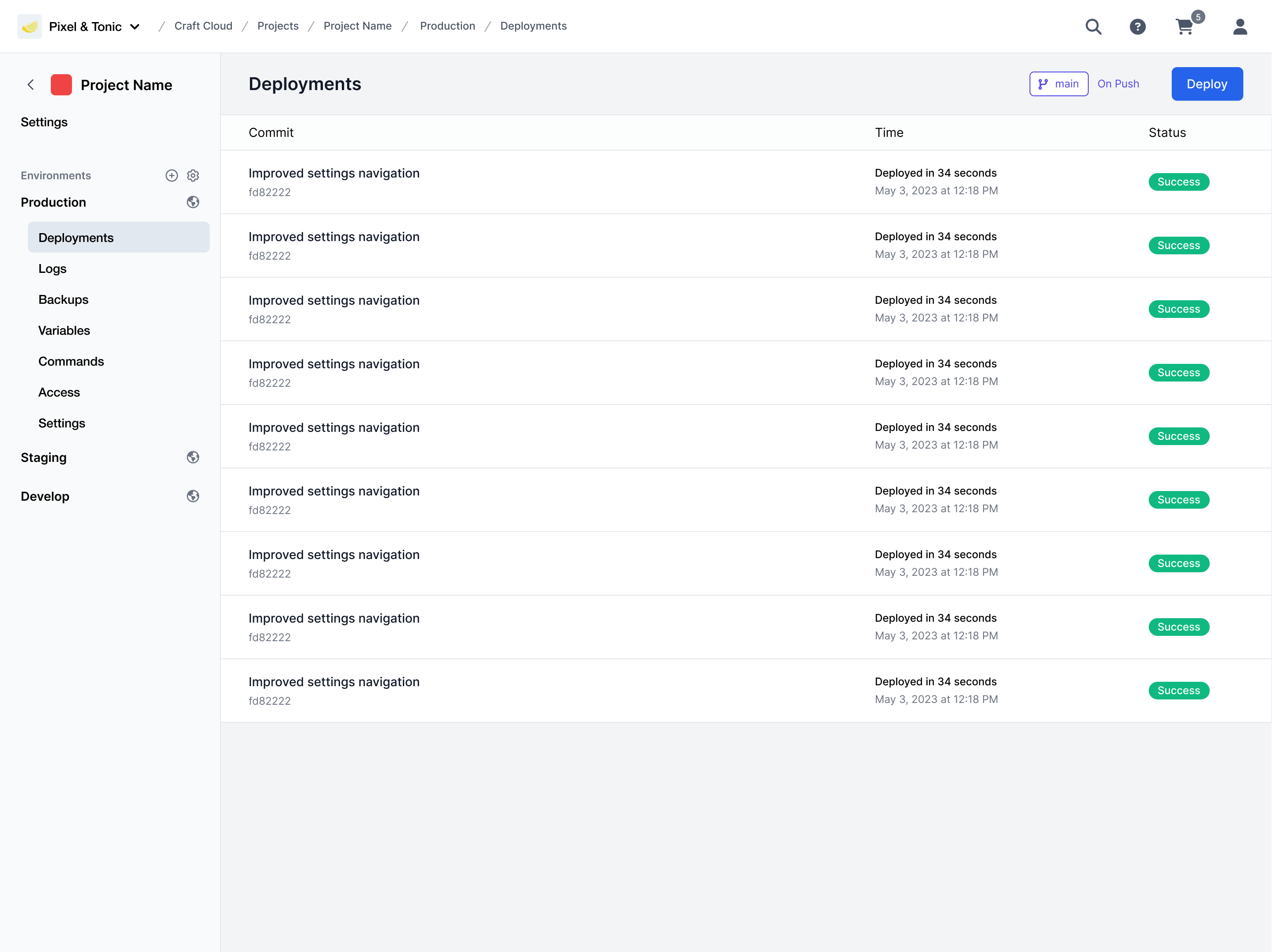
I took a lot of inspiration from services like Vercel, Netlify and DigitalOcean as they have a lot in common with Cloud. I was struggling with a deep hierarchy, from the organization down to a project, its environments (Production, Staging, Develop) and each environment’s deployments, logs and variables, and I borrowed a lot of ideas from Vercel there.
Craft Console
- Cart
- User settings
- Profile
- Orders
- Billing
- Organizations
- Integrations
- Developer Support
Organization · agencies work as a team
- Cloud
- Projects
- Licenses
- Craft CMS
- Plugins
- Claim Licenses
- Developer
- Plugin Sales
- Plugins
- Organization settings
- Profile
- Members
- Orders
- Billing
- Partner Network
- Plugin Store
Project · one Craft project in Cloud
- Domains
- Settings
Environment
ProductionStagingDevelop
- Deployments
- Logs
- Backups
- Variables
- Commands
- Access
- Settings
Impact
Developers ran their real projects on it through the private beta, and Craft Cloud launched publicly in summer 2024 to a warm welcome from the community.
What didn’t go as planned
We heard customers at conferences and in casual conversations, but for Take #1 we never really put them into our discussion group, and that should have been the very first step. For Take #2 we did, and it made all the difference. So now I’d rather reach out early to a limited group of users to make sure everything is headed in the right direction, without going public too soon and setting the wrong expectations.